> ## Documentation Index
> Fetch the complete documentation index at: https://suibyexamples.com/llms.txt
> Use this file to discover all available pages before exploring further.
# Sui & Move Overview
> Quick introduction to Sui blockchain and Move programming language
Move is the secure and resource-oriented programming language for building on the Sui blockchain. It’s designed to manage digital assets safely and efficiently, giving developers fine-grained control over how assets are created, transferred, and stored.
Originally developed by Meta for Diem, Move was adopted and evolved by Mysten Labs to power Sui, a high-performance Layer 1 blockchain built for speed, scalability, and smart contract safety.
Unlike traditional programming languages that treat data like generic variables, Move introduces a new concept: ***resources***. In Move, resources are first-class citizens; they can’t be copied or accidentally dropped.
```move [vanilla.move] theme={null}
module 0x0::TokenExample {
use std::signer;
struct Token has key {
value: u64
}
public fun create(account: &signer, amount: u64) {
move_to(account, Token { value: amount });
}
public fun get_value(addr: address): u64 acquires Token {
borrow_global(addr).value
}
}
```
This is cool because assets like NFTs or tokens are handled with cryptographic-level safety.
Instead of garbage collection or manual memory management, Move uses *ownership* and *move semantics*. Each value in Move has exactly one owner at a time, and when that value is moved, the original reference becomes invalid.
This avoids double-spends and dangling references—two common bugs in smart contract development.
## Sui Move Extends on Move
Sui Move is a variant of Move (different from the original version). Sui Move extends the core Move language with new features like object-centric programming.
On Sui, everything is treated as an object with a unique ID—a coin, a smart contract, or a game item. These objects live on-chain and can be passed between users, upgraded, or mutated using Move functions called *entry functions*.
```move [sui.move] theme={null}
module sui_example::token {
use sui::object::{Self, UID};
use sui::transfer;
use sui::tx_context::{Self, TxContext};
struct Token has key, store {
id: UID,
value: u64
}
public entry fun create(value: u64, ctx: &mut TxContext) {
let token = Token {
id: object::new(ctx),
value
};
transfer::public_transfer(token, tx_context::sender(ctx));
}
}
```
To get started with Sui Move, install the Sui CLI and initialize a new project with `sui move new`. Write your modules in `.move` files and define structs, functions, and resources.
Use the `entry` keyword to declare public entry points for your smart contracts. Then compile your code with `sui move build` and test it locally before deploying.
Sui Move has a powerful standard library and frameworks for handling complex operations, from capability-based access control to programmable transactions.
You’re ready to build a secure, asset-centric smart contract on one of the fastest blockchains. That’s Sui Move in 100 seconds.
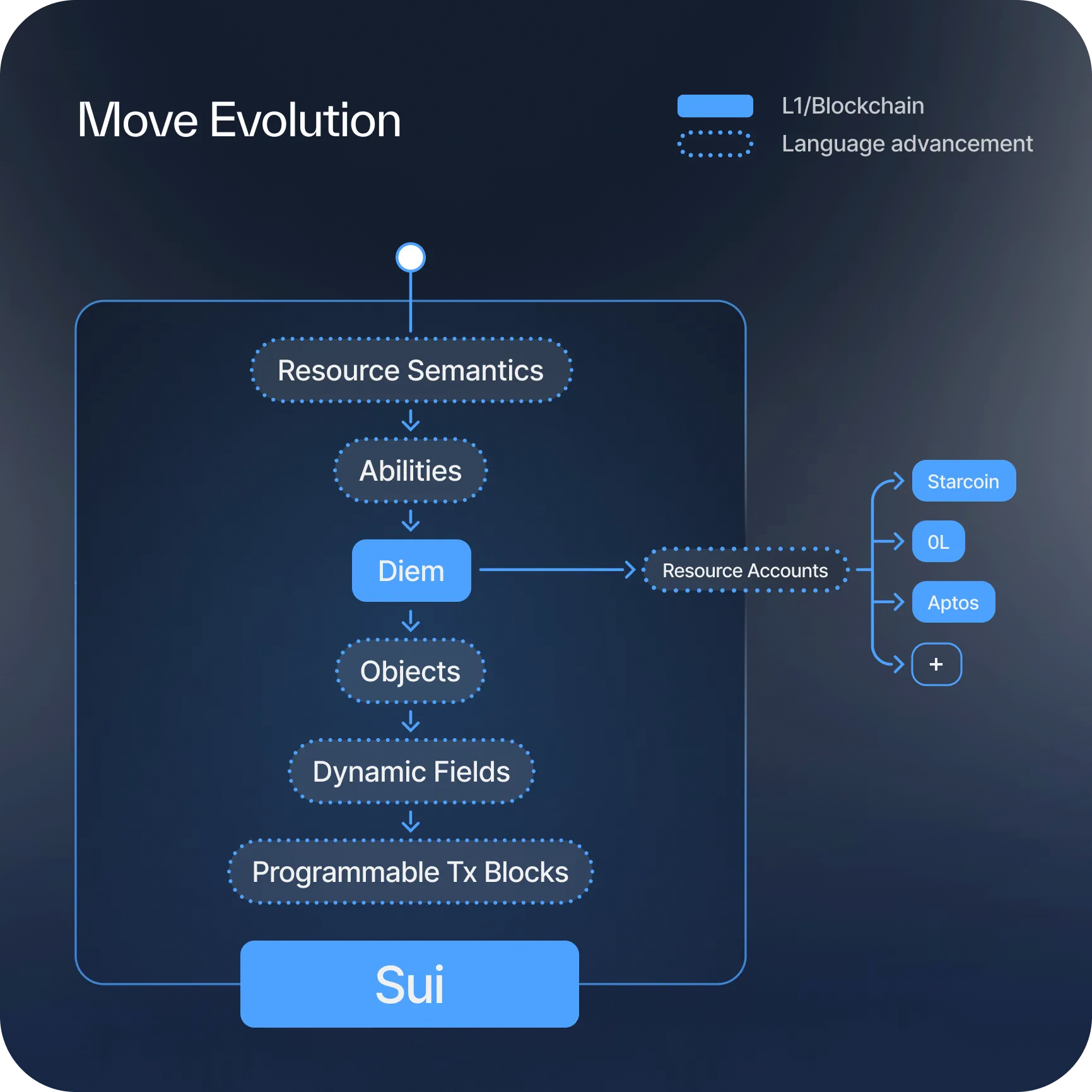 Sui Move is a variant of Move (different from the original version). Sui Move extends the core Move language with new features like object-centric programming.
On Sui, everything is treated as an object with a unique ID—a coin, a smart contract, or a game item. These objects live on-chain and can be passed between users, upgraded, or mutated using Move functions called *entry functions*.
```move [sui.move] theme={null}
module sui_example::token {
use sui::object::{Self, UID};
use sui::transfer;
use sui::tx_context::{Self, TxContext};
struct Token has key, store {
id: UID,
value: u64
}
public entry fun create(value: u64, ctx: &mut TxContext) {
let token = Token {
id: object::new(ctx),
value
};
transfer::public_transfer(token, tx_context::sender(ctx));
}
}
```
To get started with Sui Move, install the Sui CLI and initialize a new project with `sui move new`. Write your modules in `.move` files and define structs, functions, and resources.
Use the `entry` keyword to declare public entry points for your smart contracts. Then compile your code with `sui move build` and test it locally before deploying.
Sui Move has a powerful standard library and frameworks for handling complex operations, from capability-based access control to programmable transactions.
You’re ready to build a secure, asset-centric smart contract on one of the fastest blockchains. That’s Sui Move in 100 seconds.
Sui Move is a variant of Move (different from the original version). Sui Move extends the core Move language with new features like object-centric programming.
On Sui, everything is treated as an object with a unique ID—a coin, a smart contract, or a game item. These objects live on-chain and can be passed between users, upgraded, or mutated using Move functions called *entry functions*.
```move [sui.move] theme={null}
module sui_example::token {
use sui::object::{Self, UID};
use sui::transfer;
use sui::tx_context::{Self, TxContext};
struct Token has key, store {
id: UID,
value: u64
}
public entry fun create(value: u64, ctx: &mut TxContext) {
let token = Token {
id: object::new(ctx),
value
};
transfer::public_transfer(token, tx_context::sender(ctx));
}
}
```
To get started with Sui Move, install the Sui CLI and initialize a new project with `sui move new`. Write your modules in `.move` files and define structs, functions, and resources.
Use the `entry` keyword to declare public entry points for your smart contracts. Then compile your code with `sui move build` and test it locally before deploying.
Sui Move has a powerful standard library and frameworks for handling complex operations, from capability-based access control to programmable transactions.
You’re ready to build a secure, asset-centric smart contract on one of the fastest blockchains. That’s Sui Move in 100 seconds.